
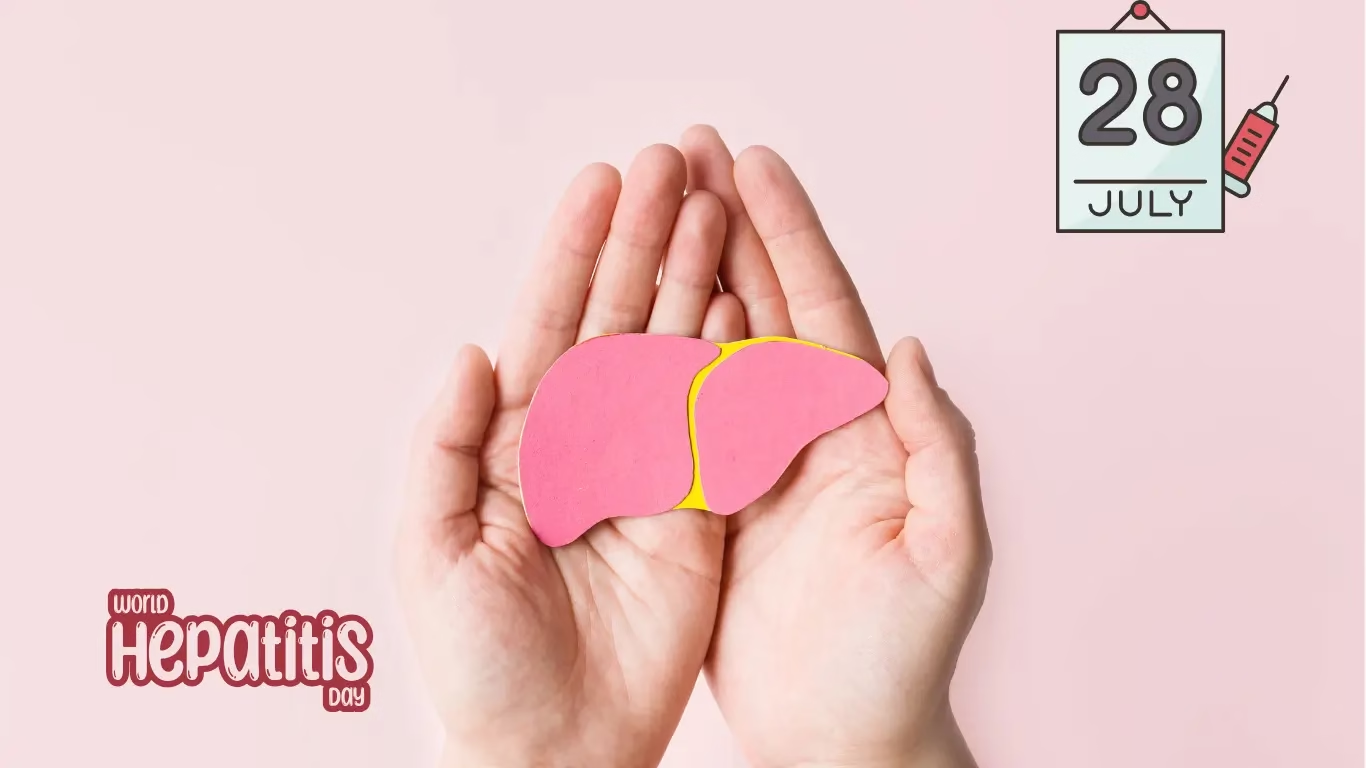
Every year on July 28, the world comes together to raise awareness about viral hepatitis – a global health threat that causes over a million deaths annually. The 2025 theme, “Let’s Break It Down”, calls on governments, health systems, and communities to dismantle the barriers that still keep millions from prevention, timely diagnosis, and treatment. As India continues its journey toward the 2030 elimination goal, this year’s focus sheds light on both alarming trends and promising breakthroughs in the fight against hepatitis.
According to The Times of India, a hepatitis A outbreak in Pune has caused cases to more than double from March to June 2025, compared to the same period last year. Contaminated water and unsafe food have been identified as key causes. Health authorities urge citizens to boil drinking water, avoid street food, maintain strict hand hygiene, and get vaccinated against hepatitis A.
According to Indian Express, the Indian Council of Medical Research (ICMR) is scaling up rapid diagnostic testing for Hepatitis B across rural India. These kits will be introduced at Ayushman Arogya Mandirs, sub-centres, and PHCs (Primary Heath Centres)- a move that could drastically improve early detection and timely care, especially in underserved areas.
At the national level, concerns over blood safety have resurfaced following a contaminated transfusion case. Experts are now urging mandatory NAT PCR (Nucleic Acid Test using Polymerase Chain Reaction) testing for Hepatitis B, C, and HIV at all blood banks to ensure safer transfusions.
Meanwhile, in Punjab, Hepatitis C infections among injecting drug users have spiked. According to The Guardian and The Times of India, a de-addiction centre in Ludhiana reported that 30% of the entire 2024 caseload was seen in just the first quarter of 2025, mostly among young male heroin users sharing needles. Fortunately, awareness drives and free antiviral therapy programs are being scaled up in response.
Research continues to bring hope. At SGPGIMS Lucknow, scientists have reported up to 80% reduction in liver fat and inflammation in mice with NASH (a severe form of fatty liver), using dehydroepiandrosterone (DHEA), according to The Times of India. This could pave the way for India’s first oral treatment for fatty liver disease. In addition, cutting-edge AI models called Virology-Informed Neural Networks (VINNs) are now being used to map Hepatitis B progression and improve treatment timing and community-level monitoring.
The American Gastroenterological Association (AGA) has also issued new clinical guidance recommending that antiviral prophylaxis be extended up to 12 months after hepatitis C treatment in patients co-infected with hepatitis B, significantly reducing the risk of HBV reactivation.
As we mark this World Hepatitis Day, it’s time to break the stigma, break the silence, break the delay in testing, and break the inequality in care. Hepatitis is preventable, treatable, and often curable – but only if we act together. Let’s ensure that access to testing, treatment, and education is universal.
Let’s break it down – and eliminate hepatitis by 2030.
Source: The Times of India, AGA Guidelines, medscape.com, The Guardian, & The Indian Express