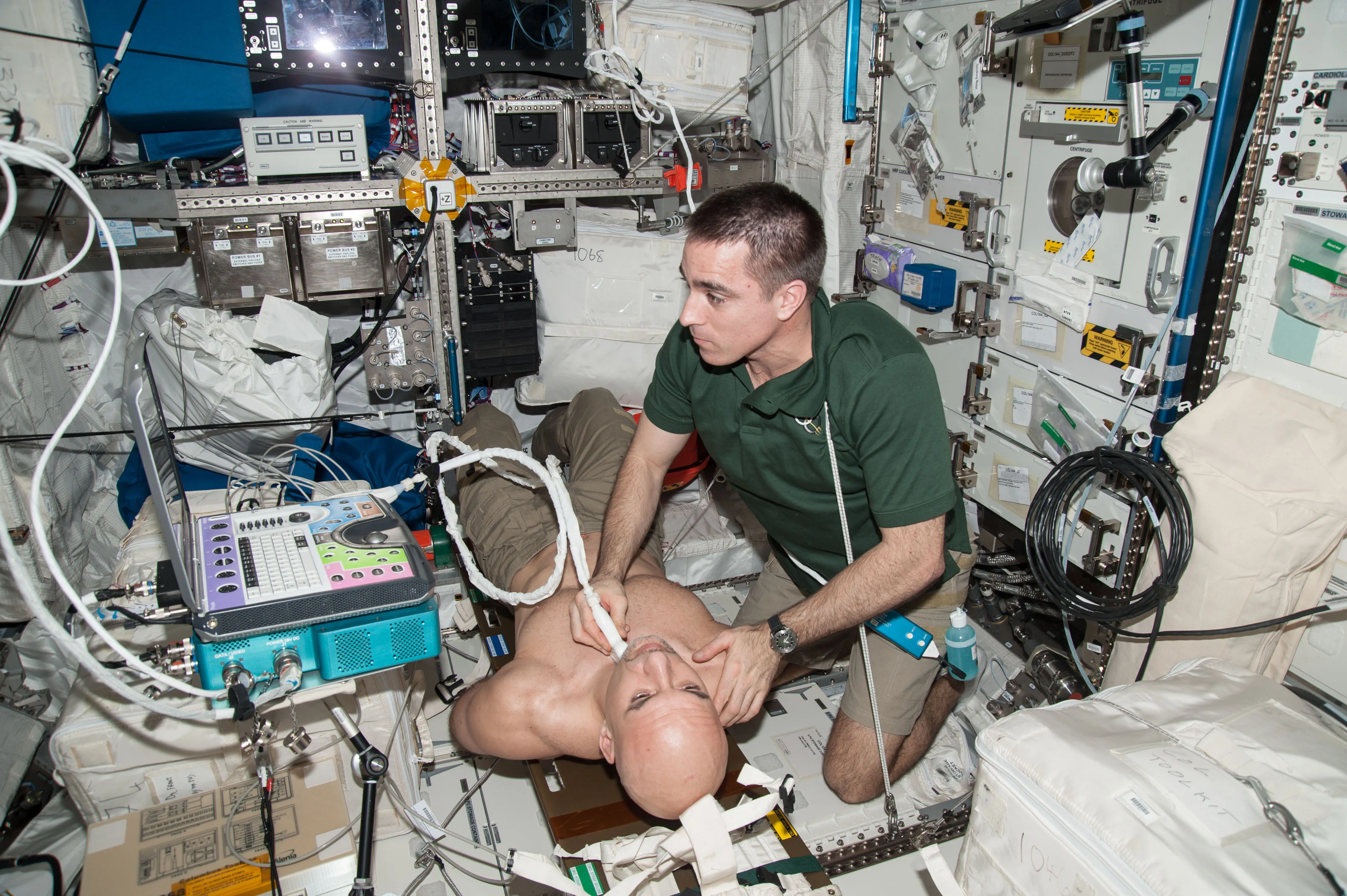
As humanity sets its sights on longer missions to the Moon, Mars, and beyond, NASA is stepping up efforts to understand the effects of spaceflight on the human body. On the International Space Station (ISS), astronauts regularly undergo a wide range of health assessments-drawing blood, checking vital signs, performing heart scans, and completing fitness evaluations. These studies reveal how microgravity, radiation exposure, and confined living conditions influence the body over time. The results not only guide the creation of countermeasures to keep crews healthy during deep-space journeys but also provide valuable insights for medical care on Earth. With real‑time input from specialists on the ground, this ongoing research is shaping the future of human space exploration.
Everyday Health Checks in Orbit
NASA astronauts, including Nichole Ayers and Anne McClain, are actively contributing to several ongoing human research projects aboard the ISS. Ayers and JAXA Commander Takuya Onishi recently collected blood samples for the Immunity Assay experiment, which studies how the stress of spaceflight impacts immune cell function. McClain, meanwhile, performed ultrasound heart scans and monitored her blood pressure to track cardiovascular changes, such as early indicators of artery stiffness and altered blood flow in microgravity.
Wearable tech like the Canadian Space Agency’s Bio-Monitor vest and headband further supports these studies, continuously recording vital signs throughout daily routines – whether exercising or sleeping. This information is sent to medical teams on Earth, who analyze the data and provide guidance.
Protecting Both Astronauts and Their Habitat
Alongside medical research, astronauts also ensure that the station itself remains safe and operational. Jonny Kim and Onishi inspected crucial life-support equipment, such as catalytic reactors and hatch seals, to maintain a secure living environment. In the Kibo module, plant-growth experiments are underway, offering insights into how plants adapt to microgravity while exploring potential solutions for future food production in space.
Roscosmos crew members added to the research with respiratory health tests and treadmill-based fitness evaluations. Together, these health checks and system inspections form part of NASA’s broader mission to prepare for extended journeys, where crews must rely on their own skills and robust systems. From medical scans to habitat upkeep, each step is essential to protecting the future of human spaceflight.