
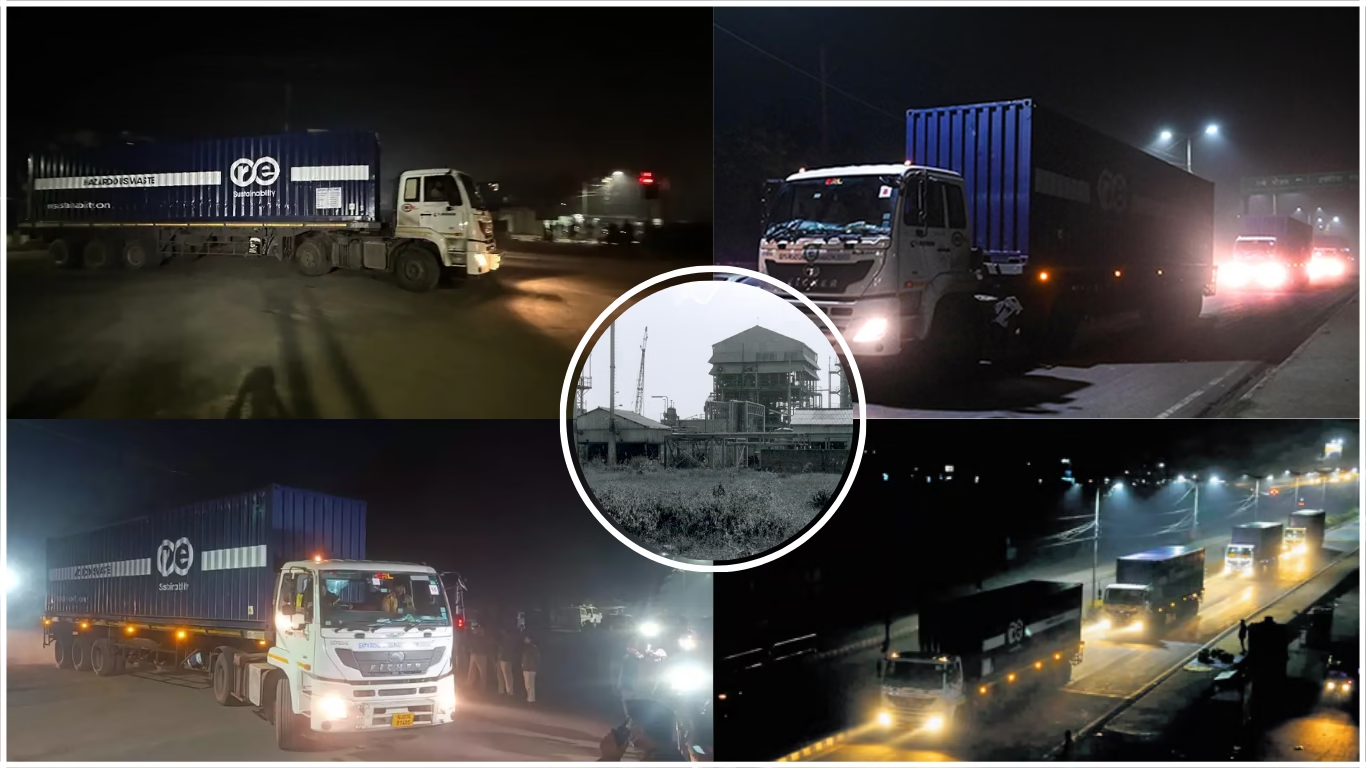
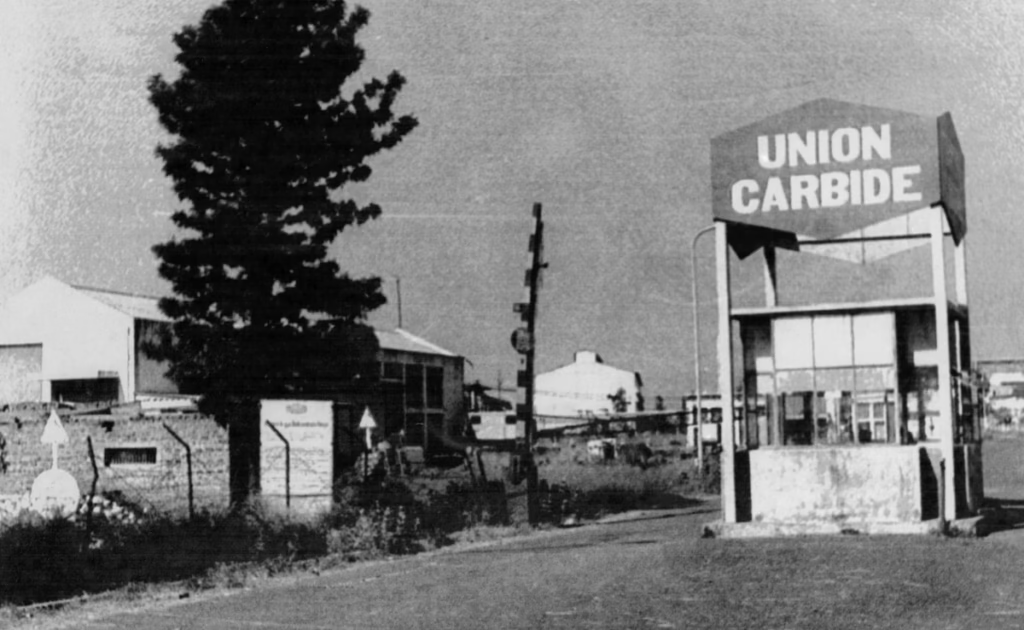
The Madhya Pradesh High Court on Monday, January 6, granted the State government six weeks to ensure the disposal of waste from the Union Carbide factory in accordance with safety guidelines. The court also directed media outlets to refrain from publishing or broadcasting incorrect information regarding the waste disposal process.
Earlier, the court had ordered the government to clear the waste from the site within four weeks, warning of contempt proceedings if the directive was not followed. This order stemmed from a writ petition filed in 2004 seeking the safe disposal of the remaining toxic waste from the Union Carbide plant. On January 6, 2025, the petitioner’s counsel, Naman Nagrath, reiterated the importance of testing the waste before its final disposal to ensure maximum safety.
The hazardous waste, sealed in 12 huge containers, was transported from Bhopal to a disposal site in Pithampur, Dhar district, on January 2. During the hearing, the division bench, led by Chief Justice S.K. Kait and Justice Vivek Jain, allowed the state government additional time after Advocate General Prashant Singh requested it. He emphasized the need to address public concerns in Pithampur and alleviate fears before proceeding with the disposal process.
Singh informed the court that misinformation and false reports about the waste disposal had led to unrest in Pithampur. Following this, the court barred print, audio, and visual media from disseminating inaccurate news on the matter.
The disposal project has sparked protests, with residents expressing fears of environmental and health hazards. Three days prior to the hearing, two protesters attempted self-immolation during a demonstration against the planned disposal, which is set to take place approximately 30 kilometers from Indore.
Additionally, the state government requested three days to unload the sealed waste containers transported to Pithampur. The court responded by affirming that it is the state’s responsibility to manage the unloading and disposal process safely, adhering to established guidelines.
The case traces back to the 1984 Bhopal gas tragedy, one of the world’s deadliest industrial disasters. On the night of December 2-3, methyl isocyanate (MIC) gas leaked from the Union Carbide pesticide plant, resulting in the deaths of at least 5,479 people and leaving thousands more with severe injuries and chronic health issues.
During the previous hearing on December 3, 2024, the High Court criticized authorities for their inaction regarding the waste that had remained at the defunct Union Carbide site for decades. The court warned that the continued neglect posed a significant risk of another disaster, reflecting a “state of inertia” even 40 years after the tragedy.


Thank you for your sharing. I am worried that I lack creative ideas. It is your article that makes me full of hope. Thank you. But, I have a question, can you help me?